_2026-05-06_08-47-52.webp)
Launching a new product has never been more demanding.
Today's brands are expected to create content for websites, social media, paid advertising, retail platforms, product pages, press releases, influencer campaigns, and internal stakeholders, often simultaneously and under increasingly compressed timelines.
The challenge isn't just creating one great campaign anymore.
The challenge is creating enough content to support an entire launch ecosystem.
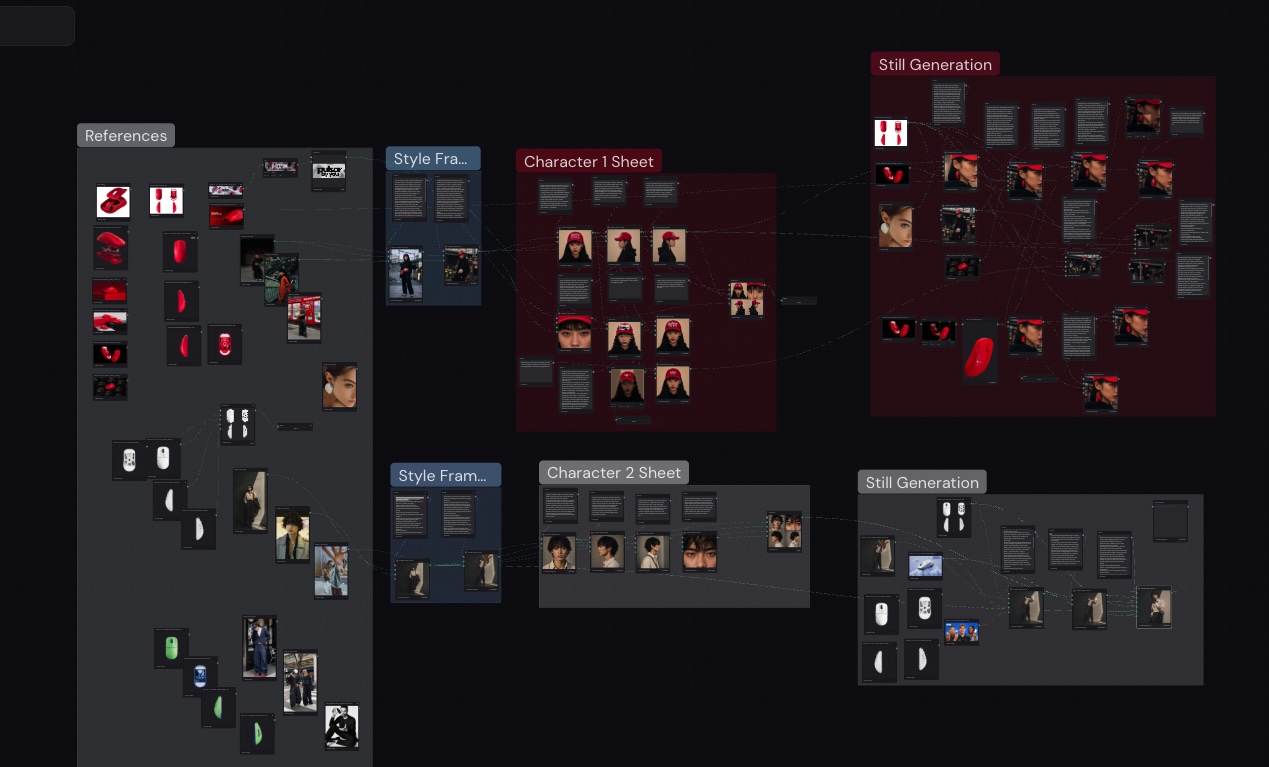
This is where AI-assisted creative production is beginning to reshape how consumer brands approach marketing.
The Traditional Product Launch Problem
A typical product launch often follows a familiar pattern.
The team develops a creative concept.
A photoshoot or video production is organized.
Assets are created, edited, approved, and distributed.
Then reality happens.
The product changes.
A new market needs localized content.
A retailer requests different dimensions.
The social team wants additional variations.
The paid media team needs new creative formats.
What started as one campaign quickly becomes dozens of deliverables.
Every change adds cost, time, and production complexity.
For many brands, the biggest bottleneck isn't creativity.
It's production capacity.
What AI Actually Changes
Much of the discussion around AI focuses on automation.
But for marketing teams, the real opportunity is iteration.
AI allows creative teams to explore more directions, test more concepts, and produce more variations without rebuilding every asset from scratch.
Instead of investing heavily in a single creative execution, brands can explore multiple possibilities before committing to a final direction.
This fundamentally changes how product launches can be developed.
Teams can move from asking:
"What is the one campaign we should make?"
to:
"What are the ten versions we should test?"
Product Consistency: The Real Challenge
One of the most overlooked challenges in AI-generated advertising is product accuracy.
Creating a beautiful image is relatively easy.
Maintaining perfect consistency across dozens of images and videos is significantly harder.
For consumer products, small details matter:
- Button layouts
- Materials
- Surface textures
- Logos
- Dimensions
- Product proportions
If these details change between assets, consumer trust can be affected and the campaign quickly loses credibility.
This is why product consistency has become one of the most important creative challenges in modern AI production.
From Product Photography to Product Worlds
Traditional product marketing often focuses on showing the product.
AI-assisted production allows brands to show the world around the product.
Instead of simply placing a gaming controller on a white background, brands can create launch stories.
Instead of showing a trail running shoe in a studio, brands can place it within the environments it was designed to explore.
Instead of building one static product page, brands can generate multiple creative territories and visual narratives around the same product.
The product remains the hero.
The storytelling possibilities expand dramatically.
Faster Testing, Better Decisions
One of the biggest advantages of AI-assisted production is the ability to test ideas earlier.
Historically, creative teams often committed significant budgets before seeing the final execution.
Today, concepts can be visualized in days rather than weeks.
This allows brands to:
- Compare multiple creative directions
- Gather stakeholder feedback earlier
- Test different visual territories
- Validate concepts before large production investments
The result is not simply faster production.
It's better decision-making.
The Future of Product Marketing
Consumer brands are entering an era where content volume, speed, and adaptability matter more than ever.
Products launch globally.
Campaigns run across multiple platforms.
Audiences expect constant creative refreshes.
The brands that succeed won't necessarily be the ones producing the most content.
They'll be the ones building systems that allow great content to evolve quickly.
AI will play an important role in that future.
Not as a replacement for creative thinking.
But as a tool that allows creative teams to spend less time producing assets and more time developing ideas.
Final Thoughts
The future of product launches isn't about creating one perfect campaign.
It's about creating flexible visual systems that can adapt across platforms, audiences, and markets.
When combined with strong creative direction, AI allows brands to move faster, test more ideas, and scale production without sacrificing quality.
Technology alone doesn't create great marketing.
But when paired with thoughtful storytelling and strong design, it gives brands something increasingly valuable:
The freedom to experiment.
And that's where some of the best ideas begin.